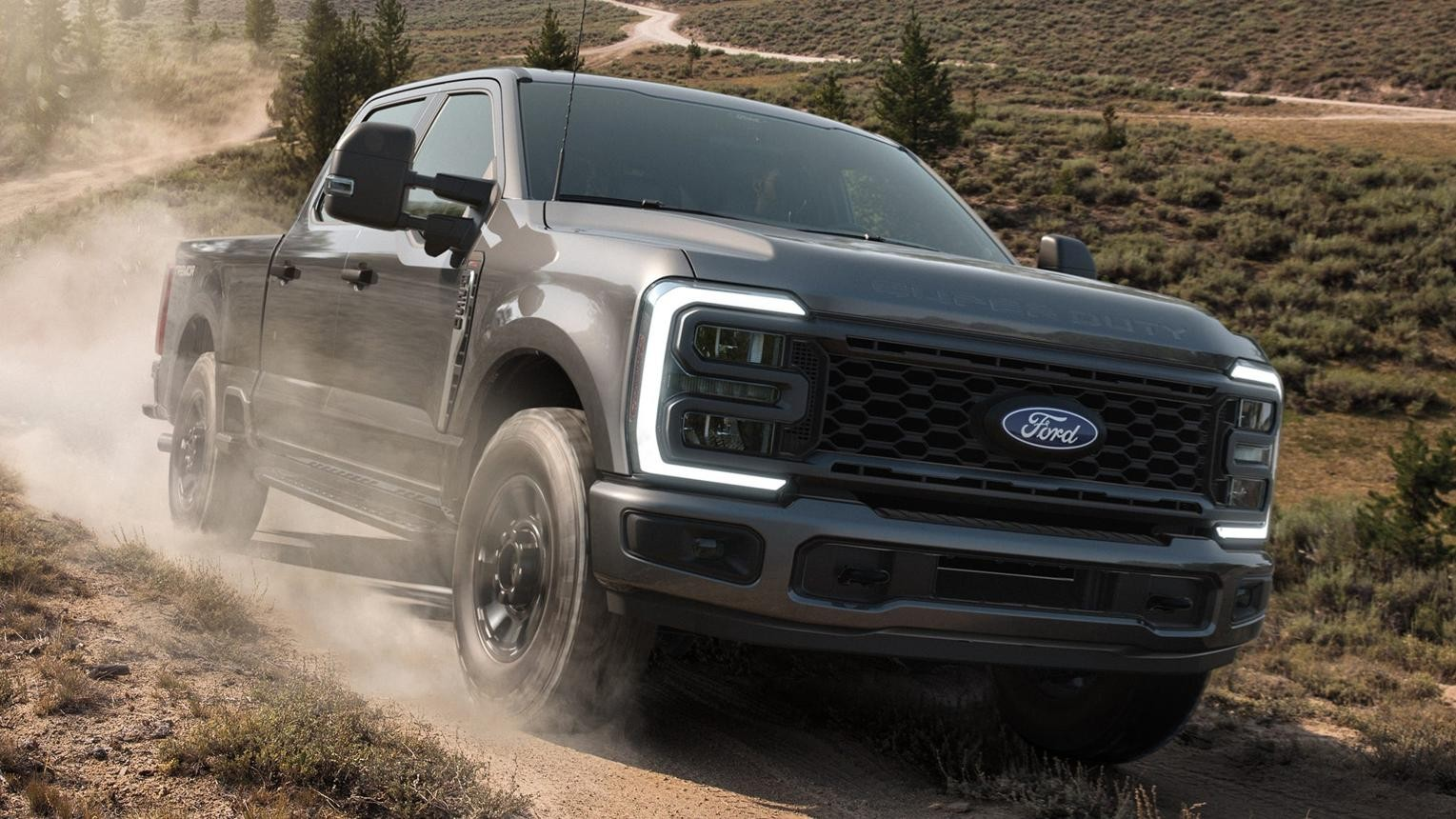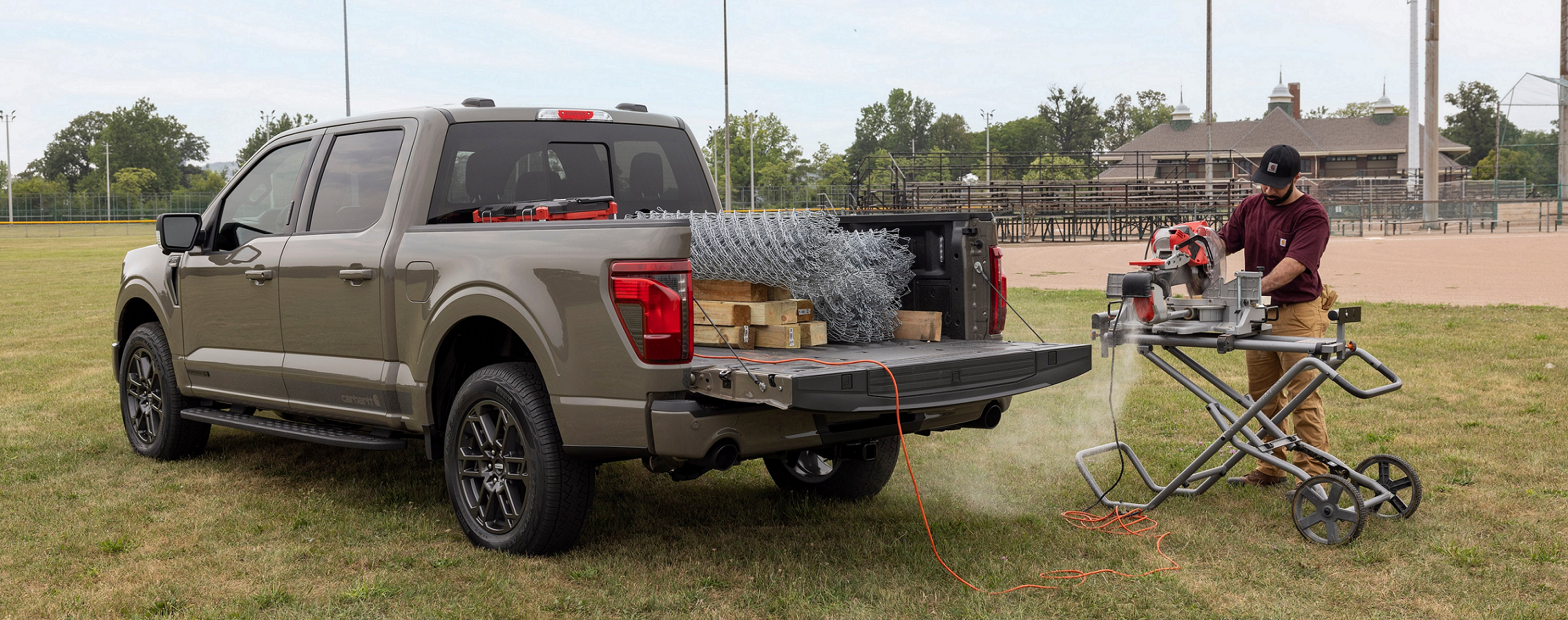


When you're shopping for a heavy-duty pickup, the 2027 Ford Super Duty vs. Ram HD comparison quickly comes down to capability, configuration, technology, and confidence when the work gets serious. Both Ford Super Duty and Ram HD trucks are engineered for demanding towing and hauling, but the 2027 Ford Super Duty gives buyers an especially compelling reason to choose Ford. With the F-250, F-350, and F-450 lineup, Ford offers a broad range of configurations designed for contractors, ranchers, fleet operators, recreational towers, and drivers who simply want a heavy-duty truck with substantial capability. The 2027 Super Duty can deliver up to 40,000 pounds of maximum available gooseneck towing, up to 35,000 pounds of fifth-wheel towing, and up to 30,000 pounds of conventional towing when properly configured. Ford also offers up to 7,900 pounds of maximum available payload and an available 1,200 lb.-ft. of diesel torque. Ford Super Duty vs. Ram HD: Capability That Works for You For buyers comparing the 2027 Ford Super Duty to the 2027 Ram 2500 and Ram 3500, configuration flexibility is one of Ford's biggest advantages. The Super Duty family gives shoppers the ability to select an F-250, F-350, or F-450 based on how much truck they actually need, while multiple cab and bed configurations make it easier to build a truck around a specific job or lifestyle. Ford's available 6.7L High-Output Power Stroke® V8 Turbo Diesel produces 500 horsepower and 1,200 lb.-ft. of torque, while the 7.3L V8 gas engine produces 420 horsepower and 445 lb.-ft. of torque. That combination gives Super Duty buyers a powerful choice for heavy towing while maintaining a proven gas-engine alternative for customers who don't require a diesel. Ram remains a serious competitor, particularly with its available Cummins diesel power and Ram 3500's impressive towing capability, but maximum capability isn't the only consideration when you're choosing a truck that may spend years pulling equipment, trailers, livestock, campers, or other heavy loads. The 2027 Super Duty Goes Beyond Towing One of the strongest arguments for purchasing a 2027 Ford Super Duty is that Ford isn't treating capability as simply a towing-number competition. For 2027, Ford expands the Super Duty's off-road potential with new factory configurations that give buyers more ways to get the capability they need without relying on aftermarket modifications. The Tremor Off-Road Package is now available on the XL with STX Appearance Package and, for the first time, on Crew Cab models with an 8-foot bed. Ford also introduces the XL Off-Road 35-Inch Tire Package, which includes factory-installed 35-inch off-road tires, increased ride height, electronic-locking rear differential, limited-slip front differential, performance shocks, skid plates, and Trail Control, Trail Turn Assist, and Rock Crawl Mode. Ford is also making Platinum trim available on F-350, F-450, and F-550 Chassis Cab models, giving commercial customers an upscale interior without giving up the flexibility of a chassis-cab platform. Why Buy a Ford Super Duty Instead of a Ram HD? Ultimately, the Ford Super Duty vs. Ram HD decision should be based on what you expect your truck to accomplish every day. If you need a heavy-duty pickup that can tow enormous loads, carry substantial payloads, provide multiple configurations, tackle challenging terrain, and offer advanced trailer technology, the 2027 Super Duty makes an extremely strong case for itself. Ford's Super Duty lineup combines the F-250, F-350, and F-450 into a comprehensive heavy-duty truck family, while features such as Pro Trailer Backup Assist™, Pro Trailer Hitch Assist™, Trailer Reverse Guidance, available 360-Degree Camera technology, and Ford's integrated towing technologies help make demanding towing jobs easier. For contractors, ranchers, business owners, outdoor enthusiasts, and serious towing customers, choosing the 2027 Ford Super Duty is about more than choosing a truck with a big engine. It means choosing a purpose-built heavy-duty platform with the capability, configuration choices, technology, and factory-backed equipment to handle demanding jobs. The Ram HD deserves consideration, but shoppers comparing Ford Super Duty vs. Ram 2500, Ford Super Duty vs. Ram 3500, or Ford F-350 vs. Ram 3500 should take a close look at what each truck can actually do in the configuration they need. For many buyers, the answer will be clear: the 2027 Ford Super Duty is an outstanding choice for anyone who expects their truck to work as hard as they do.
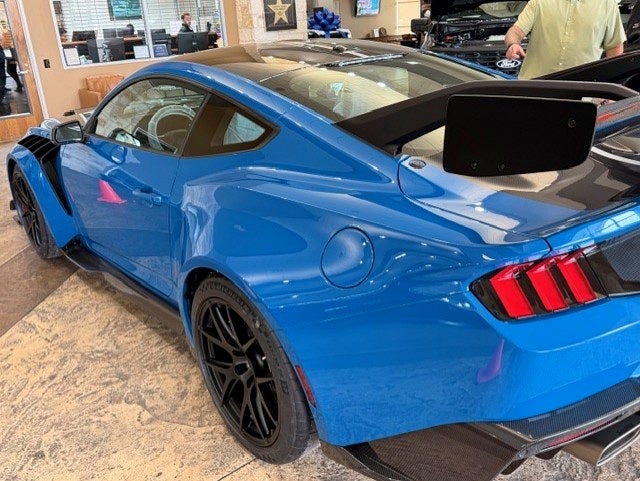
2026 Ford Mustang GTD: 815 HP, Racing Technology & Performance
When American muscle meets motorsport engineering, horsepower becomes only part of the equation. There are fast cars, and then there are cars designed to challenge the definition of what a road car can accomplish. The 2026 Ford Mustang GTD belongs firmly in the latter category. At first glance, its intentions are hardly subtle. An enormous rear wing, aggressive carbon-fiber aerodynamic components, widened bodywork and a purposeful front splitter leave little doubt about its priorities. This is not a Mustang designed merely to attract attention in a parking lot. It is a machine built around the relationship between power, aerodynamic efficiency and driver control. Ford's ambition was straightforward: bring the thinking, technology and performance philosophy of international GT racing to a street-legal Mustang. The result is a remarkable expression of American automotive engineering. 1. Power: The mathematics of American performance At the heart of the Mustang GTD is a supercharged 5.2-liter V8 producing an extraordinary 815 horsepower and 664 lb-ft of torque. Those numbers place the GTD in territory traditionally occupied by exotic European performance manufacturers. Yet the more interesting story is not the horsepower figure itself. It is how Ford engineered the vehicle to use that power. The engine is paired with an eight-speed dual-clutch transmission connected to a rear-mounted transaxle. A carbon-fiber driveshaft transfers power from the front-mounted engine to the rear transmission, helping achieve a near 50/50 weight distribution. This arrangement addresses one of the fundamental challenges of high-performance automobiles: delivering tremendous power without compromising balance. With a reported top speed of 202 mph, the GTD is capable of extraordinary straight-line performance. But straight-line speed is only one measure of a performance car. The more demanding test comes when the road begins to turn. 2. Racing: Bringing the circuit to the street The Mustang GTD's racing credentials are not simply a marketing exercise. Its engineering draws heavily from Ford's Mustang GT3 racing programme, where aerodynamic efficiency, braking consistency, chassis balance and durability matter more than showroom appeal. Consider the rear wing. On an ordinary sports car, a spoiler might be primarily decorative. On the GTD, the rear aerodynamic package is part of a carefully engineered system intended to generate downforce and maintain stability at speed. The front fender vents, aggressive splitter and underbody aerodynamic components serve similarly important purposes. They manage airflow around and beneath the vehicle, helping reduce unwanted aerodynamic lift while improving grip. Ford's engineering ambition has been demonstrated at Germany's Nürburgring Nordschleife, one of the world's most demanding automotive testing grounds. The Mustang GTD recorded a lap of 6 minutes and 40.835 seconds, becoming the first American production car to break the seven-minute barrier. That achievement is more significant than a marketing statistic. It demonstrates what happens when an American manufacturer approaches performance engineering with the same intensity traditionally associated with European motorsport. 3. Control: Speed is meaningless without precision Horsepower gets attention. Control earns respect. The GTD's sophisticated suspension system, advanced aerodynamics and carbon-ceramic braking technology are designed to make its considerable performance usable. Its semi-active suspension incorporates advanced damping and rear suspension geometry. The system can also lower the vehicle by approximately 40 millimetres for track driving. This is particularly important because high-speed driving is not simply a question of acceleration. It involves maintaining tire contact, managing weight transfer and ensuring that the vehicle responds predictably when the driver demands more. The braking system is equally serious. Brembo six-piston front brakes and carbon-ceramic rotors provide the stopping capability required of a vehicle capable of exceeding 200 mph. The available active aerodynamic system adds another dimension, adjusting aerodynamic components to balance downforce and drag. In other words, Ford has not simply built an engine capable of producing extraordinary numbers. It has engineered an entire vehicle around controlling those numbers. 4. An American answer to the supercar establishment For decades, the highest levels of automotive performance have been associated with European names. Ferrari, Porsche, Lamborghini and McLaren have established formidable reputations through engineering, racing and technological innovation. The Mustang GTD represents a distinctly American challenge to that establishment. It retains the unmistakable character of the Mustang while embracing engineering solutions that extend well beyond traditional muscle-car conventions. Its supercharged V8 delivers the drama enthusiasts expect. Its aerodynamic package and chassis technology address the demands of modern circuit driving. And its Nürburgring performance provides measurable evidence that Ford's ambitions extend well beyond straight-line acceleration. The GTD does not ask whether an American manufacturer can build a supercar. It makes a rather more interesting argument: why should America settle for anything less? The Verdict: Power creates the opportunity. Engineering creates the performance. The 2026 Ford Mustang GTD illustrates an important distinction in modern automotive design. Power is relatively easy to advertise. Making that power effective, repeatable and controllable is considerably more difficult. Ford has approached the GTD as an integrated performance system. Its engine, transmission, suspension, braking and aerodynamic components are designed to work together rather than compete for attention. For enthusiasts, the GTD represents an extraordinary chapter in Mustang history. For the automotive industry, it is evidence that American performance engineering can compete on an international stage. And for anyone who believes a Mustang should be about more than simply making noise and going fast, the GTD offers a compelling answer. This is what happens when horsepower meets discipline.